


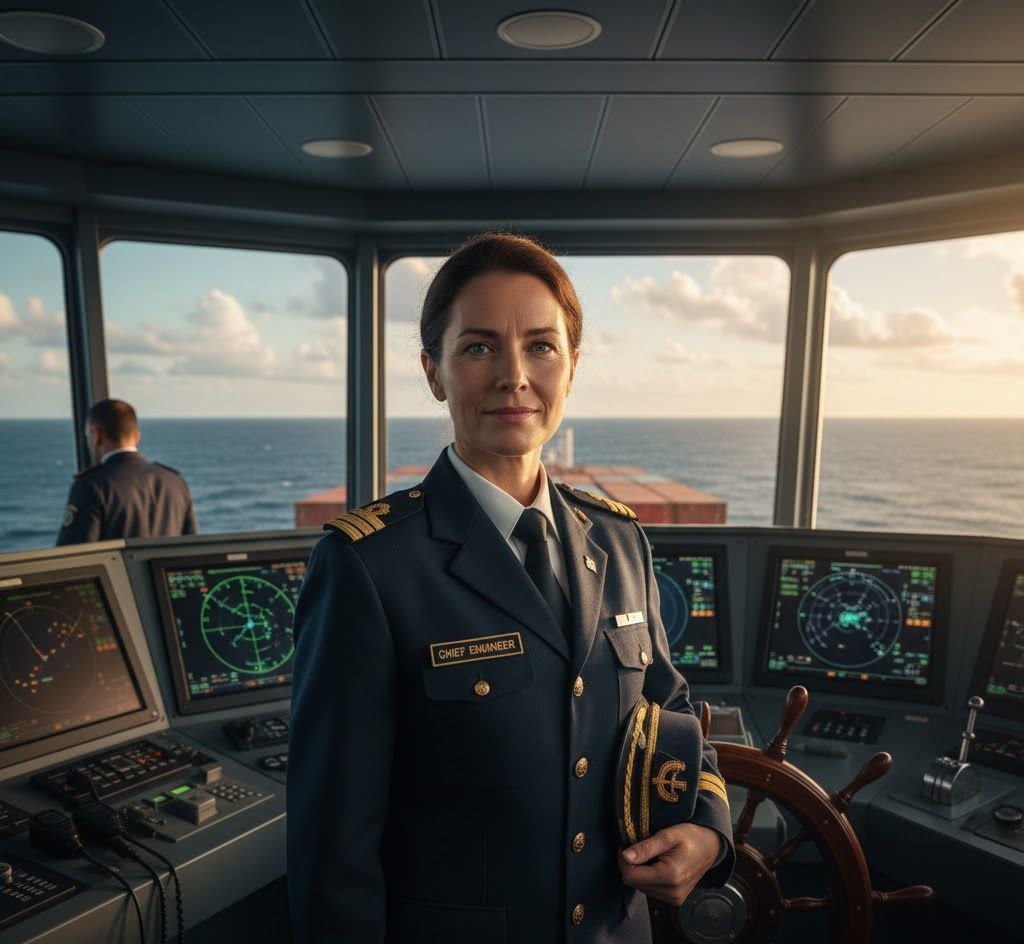
Chief Engineer: The Heartbeat of Maritime Operations
In the complex and demanding world of maritime transportation, the smooth operation of a ship depends not only on skilled navigation but equally on the unseen power below deck. At the center of this responsibility stands the Chief Engineer—the individual entrusted with the technical integrity, safety, and reliability of the vessel. While often away from the spotlight, the Chief Engineer is truly the heartbeat of maritime operations.
The Chief Engineer is the head of the engine department and bears ultimate responsibility for all mechanical and electrical systems on board. This includes the main propulsion engine, auxiliary engines, boilers, pumps, electrical power generation, fuel treatment systems, and increasingly sophisticated automation and environmental control equipment. Any failure in these systems can compromise safety, schedules, and commercial performance, making the Chief Engineer’s role both critical and relentless.
The workload of a Chief Engineer extends far beyond routine maintenance. They must anticipate problems before they occur, plan preventive maintenance programs, manage spare parts inventories, and ensure compliance with international regulations such as those set by the IMO. In emergency situations—engine breakdowns, blackouts, fires, or flooding—the Chief Engineer is required to act decisively under extreme pressure, often in harsh conditions and with limited external support.
Equally demanding is the human element of the job. A Chief Engineer leads a diverse engine-room team, often composed of multinational crew members with different backgrounds and levels of experience. Training junior engineers, enforcing safety culture, managing fatigue, and maintaining discipline are all essential aspects of the role. Strong leadership, communication, and mentoring skills are just as important as technical knowledge.
The physical and mental demands placed on Chief Engineers are considerable. Long working hours, high temperatures, constant noise, and vibration are part of daily life in the engine room. Added to this is prolonged separation from family and life ashore. Despite these challenges, Chief Engineers are expected to maintain focus, precision, and professionalism at all times, as even small mistakes can have serious consequences.
In today’s shipping industry, the role of the Chief Engineer is evolving rapidly. The introduction of alternative fuels, energy efficiency technologies, digital monitoring systems, and stricter environmental regulations has expanded the scope of responsibility. Chief Engineers are now at the forefront of the industry’s transition toward greener and more sustainable shipping, balancing operational efficiency with environmental stewardship.
In every successful voyage, cargo delivery, and safe arrival at port, the contribution of the Chief Engineer is deeply embedded. Though their efforts may remain largely unseen by the outside world, their dedication, expertise, and endurance keep global trade moving. The ship’s engines may be made of steel, but it is the Chief Engineer’s knowledge and commitment that truly give them life.
Website: www.sbb-co.org
Email : jobs@sbb-co.org
Number:00989365947495
Comments (0)
Leave a Comment
No comments yet. Be the first to comment!